Thursday, October 28, 2010

Andalusian chicken-noodle soup with chickpeas

You wouldn't know it from the past couple of balmy days, but fall really is here, and that means soup weather!

This soup is the very definition of a meal in a bowl, and it would be the perfect thing to warm you up after a few hours of leaf raking, which is what I forsee in my future this weekend. I've made this soup twice now, and neither time did I have the required sherry. I think the first time I tried to cheat a bit with some red wine vinegar, but it was a poor substitute I'm sure. So go on and splurge for some sherry if you give this a try.

Start by poaching your chicken in the stock and herbs. I used bone on chicken breasts both time, because I think they have more flavour. I did remove the skin prior to poaching though.

Then cook your sausage and add in the veggies. One time I used a fresh chiorizo sausgage, which I removed from the casing and cooked just like ground meat. The second attempt at this soup used some of the chopped chured sausage. Can't say I had a preference, as both were pretty good.

While the vegetables are softening, you shred your chicken. This recipe yields a lot of meat, which helps to make it hearty.


Then add the broth back to the pot, cook your noodles, and toss in the meat, chickpeas and parsley. Almost ready to serve!


Serve in a warm bowl alongside some homemade biscuits and you've got yourself a pretty satisfying dinner.

Andalusian chicken-noodle soup with chickpeas (From Food & Drink Autumn 2010)

8 cups homemade or low sodium chicken stock
2 bone in chicken breasts, skin removed
2 bay leaves
1 leafy spring of flat leaf parsley
2 tbsp olive oil
4 oz (125g) cooked sweet or hot chorizo sausage, diced
1 onion, finely chopped
1 medium carrot, diced
1 medium potato, peeled and diced
2 cloves garlic, minced
1 tsp sweet smoked paprika
½ c dry sherry
2 oz spaghetti, broken into 2-inch pieces
½ tsp each salt and freshly ground pepper
1 can (540 ml) chickpeas drained and rinsed
½ c finely chopped flat-leaf parsley

1. In large saucepan, combine stock, chicken breasts, bay leaves and parsley sprig. Bring to a boil over high heat. Reduce heat to medium-low and simmer, partially covered, for 20 minutes or until chicken breasts are no longer pink inside. With a slotted spoon, remove chicken breasts from stock and set aside to cool slightly.

2. When chicken breasts are cool enough to handle, remove meat from bones and shred meat finely. Set aside.

3. In large Dutch oven, heat oil over medium heat. Add chorizo and cook stirring for 3 to 5 minutes or until chorizo starts to brown and renders some of its fat. Add onion, carrot and potato. Cook, stirring for 5 to 7 minutes or until onion is softened but not brown. Add garlic and paprika. Cook stirring for one minute or until fragrant.

4. Add sherry. Bring to a boil, stirring to scrape up any browned bits from bottom of pot. Boil for 2 minutes or until sherry has almost evaporated.

5. Strain stock into Dutch oven, bring to a boil over high heat. Add spaghetti, salt and pepper. Reduce heat to medium-low, simmer partially covered for 8 to 10 minutes or until potato and spaghetti are tender.

6. Stir in reserved chicken meat and chickpeas. Simmer, uncovered, over medium-high heat for 2 minutes for flavours to blend; stir in parsley. Taste and add more salt and pepper if necessary. Ladle into warm soup bowls.

Serves 6 to 8

Wednesday, October 13, 2010

Chocolate Guinness birthday cake

I like birthday cakes. I like making them and I like getting them. I can still remember a butterfly cake my mum made for one of my birthdays years ago (I don’t remember the age, but I’m sure we’re talking single digits). It may have required a special pan, or just some fancy cutting, but the cake was complete with butterfly body and wings, which were colourfully decorated in candy and icing. I think there were licorice antennae too. It may not have won any Martha Stewart awards for finesse, but it was pretty fancy for Lakefield in the seventies. And hey, that was the era before Martha Stewart, so her opinion didn’t matter anyway.

There’s something cheering about a homemade birthday cake, even if it has a sloping top and the icing isn’t quite perfectly spread. Cakes made from scratch don’t look as pretty as their bakery-shop cousins, but that’s kind of the point, right? When someone goes to the trouble to mix up carefully selected ingredients, gently pours batter into pans, then frets as the cake rises and the edges brown, it means they’ve thought about you, and they’ve put time and effort into creating something that’s essentially meant to celebrate you.

That’s why I was happy to be able to make a birthday cake for my dad in September. I chose a Guinness chocolate cake for the occasion. The cake is a nice combination of chocolate — and yes beer — that results in a dense and damp concoction. This is not your light and fluffy Duncan Hines cake. And best of all, it’s remarkably simple to make. Or is the best part the leftover Guinness? Either way, win win.

Crack open a can and get started...

Melt the beer and butter in a pan.

And measure out your cocoa.

Mix up the eggs and sour cream (or yoghurt as I substituted).

Mix all together until you get this gooey mess.


And here's the baked cake. It's really moist -- and quite heavy too!

And here's the birthday guy enjoying the cake, with the world's most pathetic candle ever on top!

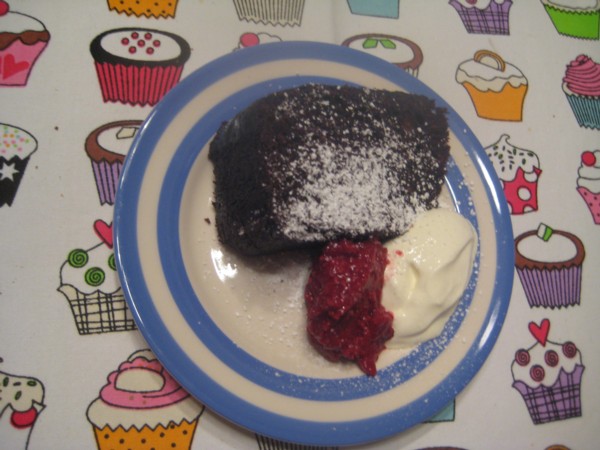
But this slice is looking a bit better with some raspberries and cream. Bake one for your next birthday!

Chocolate Guinness cake
from Nigella Lawson's Feast

•250ml Guinness
•250g unsalted butter
•75g cocoa
•400g caster sugar
•1 x 142ml pot sour cream
•2 eggs
•1 tablespoon real vanilla extract
•275g plain flour
•2 1/2teaspoons bicarbonate of soda

1.Preheat the oven to gas mark 4/180°C, and butter and line a 23cm springform tin.

2.Pour the Guinness into a large wide saucepan, add the butter - in spoons or slices - and heat until the butter's melted, at which time you should whisk in the cocoa and sugar. Beat the sour cream with the eggs and vanilla and then pour into the brown, buttery, beery pan and finally whisk in the flour and bicarb.

3.Pour the cake batter into the greased and lined tin and bake for 45 minutes to an hour. Leave to cool completely in the tin on a cooling rack, as it is quite a damp cake.

Thursday, October 7, 2010

Memories of the Danube

I know, I know. I've been a terrible, lousy blogger of late. And it's not that I haven't been cooking either, because I have. It's just the writing about it part that I need to improve on.

So there are some cooking updates to come, I promise. But in the meantime, I'm so sad to hear about the toxic spill in Hungary. Apparently all that red sludge is making its way to the Danube. I was in Hungary exactly a year ago, and got to see the Danube in all its shimmering glory. It's heartbreaking to think of it in a less than pristine state.

Here's how the river looked this time last year. Nice, huh?

In other news, here's a story I wrote recently about the rules of engagement in social media, and another about the business of blogging. Because you know I'm getting rich from this one!

Sunday, September 19, 2010

Swiss chard gratin with grain mustard

What a difference a few weeks make!

Last time I checked in, it was in the middle of another bloody heatwave and I was complaining bitterly about being hot and sweaty.

Well, now it's fall and the nights are blissfully cool. I've even had to turn the furnace on once already. Quite a change indeed!

In addition to the weather change, I've been busy job hunting and interviewing, finishing up my current gig, fighting grafitti and moles in my yard, and starting my class at the Gonk. It's been hectic, but I have found some time to do some cooking in between all the craziness.

One of my favourite dishes in the past while has been this chard gratin. I've sung the praises of this vegetable on this blog before, but prepared in the gratin style with some mustardy cream is definitely a winner.

The recipe comes from Nigel Slater's Tender, which is full of gorgeous vegetable recipes. I look forward to trying more of them as the cold weather continues.

Start by chopping the chard and separating the stems from the leaves.

Blanche the veggies in hot, salted water, beginning with the stalks first. Cook until just tender, then drain and add to a buttered 9x13" baking dish. The leaves get blanched next, but they'll take just a few seconds until they're wilted and ready.

Pour the cream mixture over top and sprinkle with a handful of parmesan cheese.

This is how it looks after being in the oven for half an hour or so. It's goes all bubbly and smells incredible. The cheese crisps up on top and forms a crusty top, which is in essence, what a gratin is. You'll want to grab a spoon and dig right in -- trust me.
This is a really, really good side dish, and I would be tempted to eat this all by itself for supper, and would do so quite happily.

Swiss chard gratin with grain mustard
(from Nigel Slater's Tender)

*I'm recreating this recipe from memory as I can't be bothered to go upstairs and get the book

500g chard (this is one or two bunches, depending on size)
400 ml heavy cream (I used slightly less, and I think you could substitute part of the cream with milk and it would still be fine)
a generous tablespoon of grain mustard
a little butter for the dish
salt and pepper to taste
generous handful of grated Parmesan cheese

Set the oven at 180C/gas mark 4/375C.

Remove the leaves from the chard. Keep them separate. Cut the stalks into short, manageable lengths then cook them in boiling, salted water. They should be almost tender in about 5 minutes. Drain them thoroughly and add to your buttered dish. Do the same with the leaves, but cut the cooking time considerably.

Stir the mustard into the cream, and season with a little salt and black pepper and pour over the vegetables. You may find that the cream won't quite cover the chard, but no matter. Sprinkle with a handful of cheese and bake until golden, bubbly and inviting.

Tuesday, August 31, 2010

Lemon mint granita

It's hot! Again? Still? I really can't keep track. All I know is that it's 29 degrees inside my house and I'm tired of going out the door to work covered in sweat. Disgusting, gross summer of 2010, you can finish any time now. Fall, I'm so ready for you.

So in the middle of heat wave number 4,012, I decided the fans and cold drinks weren't quite cutting it. I needed something a little cooler, a little more refreshing to help me chill out. Granitas are easier than ice cream, and usually don't take too much effort to prepare. The end result, in this case, is a tart, icy number that's sure to perk up your palate and hopefully cool down your body temperature on a day when it's almost too much effort to change the channels on the remote control.

Start by removing the peels and pith from four lemons. I used five because my lemons were small, and were smaller after I peeled them none too carefully.

Pack 'em up and put 'em in the freezer for a while. A few hours at least, or in my case, a few weeks. Kinda forgot about them in there to be honest.

Then when they're frozen lemony balls, place them in your food processor.

And add the mint. You'll need about 35-40 leaves, all rinsed and picked off the stems.

Then pulse and blend 'til the mix looks a little like this. Next, let the mixture sit for about 15 minutes.
Scrape the whole mixture into a strainer, and push out as much juice as you can. Then, pour four cups of water, mixed with about three tablespoons of sugar over, pressing with a spatula to extra as much flavour as possible. Note that my method doesn't exactly follow the recipe below, mostly due to the fact that I didn't bother to read it properly. I suggest you pay more attention than I did and do it the proper way for better results.

You're left with this. Pop it in the freezer and let it sit for about 40 minutes or so until it starts to freeze.
Or.....remember it about two hours later and pierce frantically with a fork to break up the ice crystals. The goal here is to have flecks of shaved ice, rather than the glacier like chunks of ice I ended up with. Oops.

I suppose I could have thawed and re-frozen in order to achieve the proper texture, but I was too lazy, and too melty hot to bother. So I chopped out enough chunks to fill a bowl and let the lemony chilling commence. This is kind of like a grown up version of the slushee, and dare I say, would be made ever more excellent with a generous glug of limoncello on top. Refreshing indeed!

Lemon mint granita
(adapted from Smitten Kitchen)

4 lemons
4 cups water
Sugar, to taste (we used 3 tablespoons, like a tart lemonade)
Handful of fresh mint leaves

Clean and wash the lemons. Cut off the top quarter of the lemons and slice a thin bevel off the bottom, so they can stand up straight. (You can skip this step if you don’t want to serve them in frozen lemon cups.) Using a grapefruit knife, carefully remove all of the lemon flesh and juice (working over a bowl ensures you won’t lose any), being careful not to cut through the bottom. Stand the lemons on a plate or cookie sheet and freeze until solid.

Using a food processor (a blender will work as well), toss a handful of washed and dried fresh mint leaves into the work bowl. (35-40 leaves.) Add the frozen lemons, and pulse until mostly pureed. Let mixture stand for 15 minutes, so the mint releases its flavor, then press the mixture through a fine-mesh strainer. You’ll end up with approximately one cup of lemon-mint juice.

Stir in the water, then sugar, one tablespoon at a time until the sugar is dissolved and the mixture is to your desire level of sweetness. Pour the mixture into a large roasting pan or baking dish, large enough that the liquid isn’t more than one-inch deep. (Otherwise it takes forever to freeze, trust me. A 9×13-inch pan worked great here.)

Freeze for about 40 minutes, then remove the mixture and scrape with two forks to break up the ice. (Your freezing time will vary, depending on the temperature and muscle of your freezer.) Return to the freezer and freeze until solid, about 2 to 3 hours, scraping it again with forks every hour or so.

Sunday, August 22, 2010

Blueberry banana muffins

At least once a summer, I get a craving for blueberry muffins. There's something about the way a blueberry bursts in a baked good, staining everything around it with that intense indigo hue. Sure, you'll end up with a purple tongue and the skins in your teeth when you're done, but it seems like a bit of minor inconvenience for something that tastes so good.

I decided to look around for a blueberry muffin recipe that was a little different from the ordinary. The classic combination of white flour, sometimes scented with lemon, is a classic, but I wanted something a bit heartier, and dare I say, healthier?

I stumbled across this recipe, and as I had some bananas going soft anyway, I picked up some wheat germ at the store and got started.

Here's the bowl of dry ingredients, wheat germ included.

Then, mix up the wet, and add in the eggs.

Mash those bananas!

And fold in the berries. These aren't the wild ones I like, but they are cultivated Canadian ones, so I didn't feel too awful about them. Plus, on sale at Farm Boy!

Filling up the muffin cups. A scoop makes this bit easy.

And here they are cooling in front of the window. What a great Sunday morning treat!

Healthy blueberry banana muffins (from Martha Stewart)

•1 cup whole-wheat flour (spooned and leveled)
•3/4 cup all-purpose flour (spooned and leveled)
•1/4 cup wheat germ
•1 teaspoon baking soda
•1/2 teaspoon salt
•1/2 cup (1 stick) unsalted butter, room temperature
•1/3 cup granulated sugar
•1/3 cup packed light-brown sugar
•2 large eggs
•2 ripe bananas (about 1 pound)
•1/3 cup reduced-fat (2 percent) milk
•1 teaspoon pure vanilla extract
•1 cup frozen blueberries

1.Preheat oven to 375 degrees. Line a 12-cup muffin pan with paper liners. In a bowl, whisk together flours, wheat germ, baking soda, and salt.

2.In a large bowl, beat butter and sugars with a mixer until light and fluffy. Add eggs, one at a time, beating well after each addition. In another bowl, mash bananas with a fork (you should have 3/4 cup); stir in milk and vanilla.

3.With mixer on low, alternately add flour mixture and banana mixture to butter mixture, beginning and ending with flour mixture; mix just until combined. Fold in frozen blueberries.

4.Divide batter among muffin cups. Bake until a toothpick inserted in the center of a muffin comes out clean, 25 to 28 minutes, rotating pan halfway through. Let cool in pan 10 minutes; transfer muffins to a rack to cool 10 minutes more.

Thursday, August 19, 2010

Easy tomato basil pasta

I didn't grow any tomatoes this year, but I might try some in pots or hanging bags for next season. For those of you who have a booming crop thanks to all the heat and rain we've had this summer, this recipe should provide a great way to use up your stash.

First, assemble about a pound of small tomatoes (cherry, grape etc.). I used a variety of heirlooms I picked up at the market.

Check out these jeweled beauties!

Toss them around in some olive oil, and add in a chopped clove of garlic, and some salt and pepper.

Then they go in the oven for about 20 minutes, until the tomatoes burst. (Please ignore the pan. It belonged to a toaster oven I owned years ago that has since gone to toaster oven heaven. I know it looks gross, but I swear it's clean, and you wouldn't believe how often I actually use it.)

Meanwhile, you've been cooking your pasta and have drained it. Reserve some of the cooking water, and add the pasta to a bowl. Next, tip in the tomatoes and garlic, and any juices that collected in the pan, and add some chopped basil. Stir stir stir! Add in any cooking water to loosen the dish.

Pile it on your plate, drizzle with some olive oil, add a generous topping of parmesan cheese, and top with some fresh basil leaves. A really easy, summery tasting pasta dish in no time at all.

Easy tomato basil pasta (adapted from Shutterbean)

Here’s what you’ll need: *I halved the recipe and got two healthy servings

-1 lb, spaghetti
-1 lb. fresh cherry tomatoes (the more the merrier!)
-2 cloves garlic, chopped
-salt & pepper to taste
-olive oil

If you like your pasta a bit spicy, red pepper flakes will do the trick! You could also add some balsamic vinegar to bring out the sweetness of the tomatoes. Try it & enjoy!